What Can Texas Do About Data Centers and Other Large-Impact Projects?
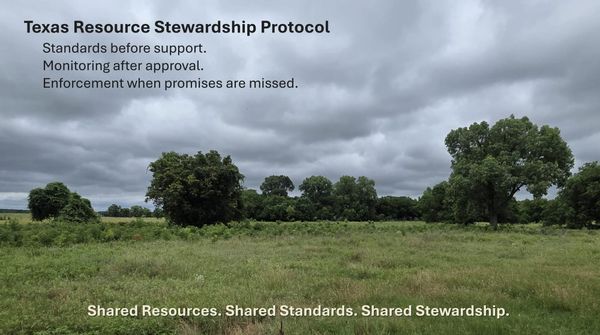
Texas does not have to choose between economic development and protecting rural communities. TRSP offers a practical framework for building better Large-Impact Projects.
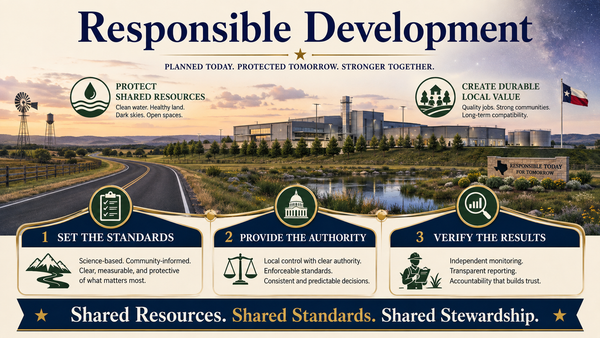
TRSP defines responsible development as measurable, transparent and accountable growth that protects shared resources while creating durable local value.
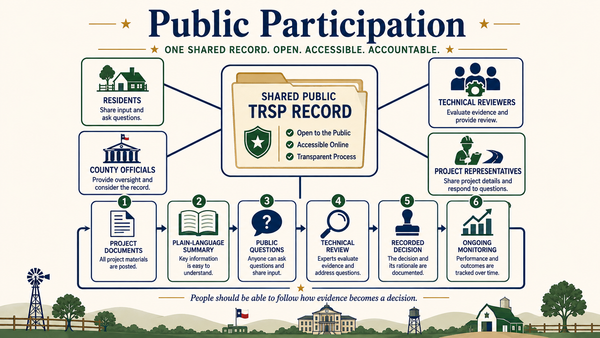
TRSP makes public participation part of the project record through accessible documents, plain-language explanations, questions, meetings and continuing oversight.
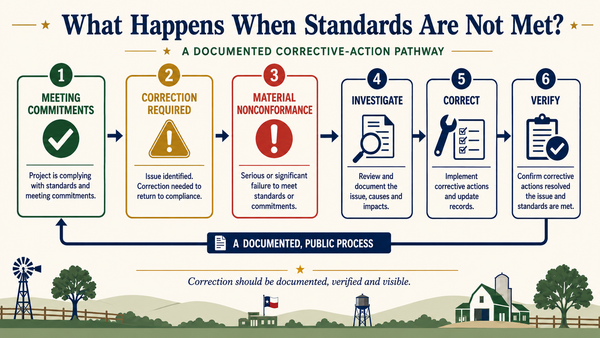
TRSP uses clear status levels, corrective action and predictable escalation so missed commitments lead to documented solutions rather than uncertainty.
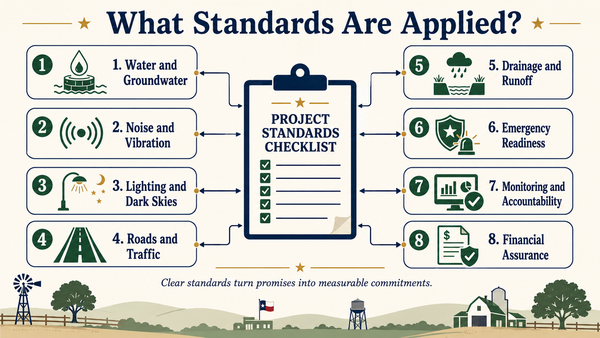
TRSP standards turn broad concerns about large-impact projects into measurable expectations that can be reviewed, recorded and verified.
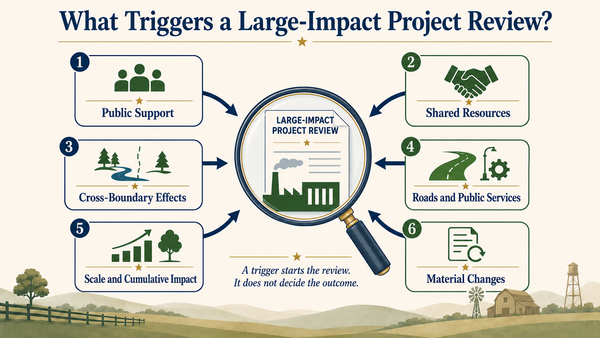
TRSP uses clear triggers to identify projects that deserve closer public review because they request public support or may place unusual demands on shared resources and local services.
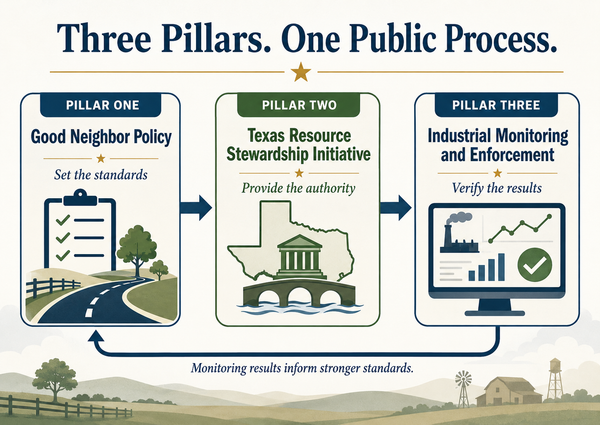
The three pillars of TRSP connect standards, authority and accountability into one practical framework for reviewing and overseeing large-impact projects.
Industrial Monitoring and Enforcement turns project promises into measurable operating expectations, public reporting and a clear path for correction when commitments are missed.
The Texas Resource Stewardship Initiative identifies the statewide standards, practical county authority and legislative support communities need to review large-impact projects responsibly.
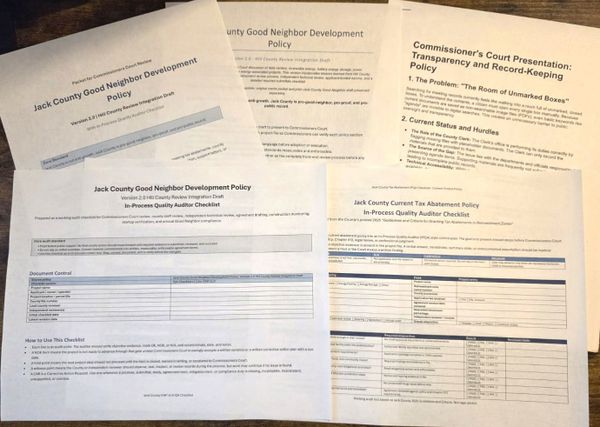
The Good Neighbor Policy gives counties a practical way to set expectations, review large-impact projects and build a complete public record before granting discretionary public support.
A plain-language explanation of TRSP, its three pillars and how it helps communities set standards, review large-impact projects and verify that commitments are kept.
A practical framework for helping rural Texas communities set clear standards, review large-impact projects and hold approved projects accountable.
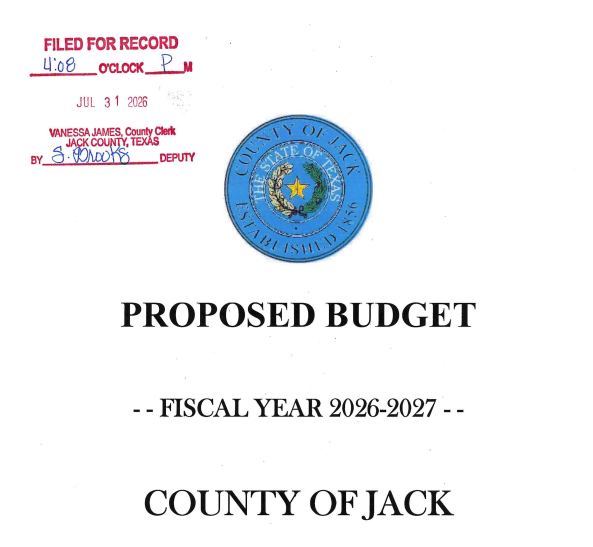
A county record can prove a decision was made. But can the next commissioner, county employee, or resident find the rule when they need it?
The work of self-government gets real when we start asking where the decisions live, how people find them, and how we build better records for the future.
Two hundred and fifty years ago, a group of imperfect people put their names, their safety, and their futures behind an idea bigger than themselves. That idea said government gets its power from the people. It said liberty is worth defending. It said public decisions should answer to the people
That feels good to say. We launched the first version of the site with a simple starting point: a place for practical civic stewardship from rural Texas, built around clear records, useful frameworks, and better ways to think through the decisions that affect all of us. The site is still
I’m starting Skew the Future from Corpus Christi, looking out over the Gulf before I head north through Texas. This feels like the right place to begin. This project begins with movement, not perfection. A coast. A road. A rural home waiting at the other end. And a state