How Jack County’s Budget Process Works: Budgets, HB 1522 and Truth-in-Taxation
Jack County’s budget, HB 1522 and Truth-in-Taxation are three connected but separate processes. Here is how they fit together, what the no-new-revenue rate means, how the Ross Fire changed the picture and what remains unresolved.


Jack County’s annual budget is not created at a single meeting.
It develops over months as elected officials and departments submit requests, Commissioners compare those requests with available revenue and the Court works toward a final spending plan. At the same time, the appraisal district supplies taxable values and state law requires calculations that determine the no-new-revenue and voter-approval tax rates.
This year, the Ross Fire added another variable late in the process. Questions also arose about the public budget hearing, newer HB 1522 meeting-notice requirements and the Truth-in-Taxation process used to adopt the property-tax rate.
Those subjects are connected, but they are not one legal process.
That distinction is the key to understanding where Jack County stands.
Three different tracks are running at the same time
It helps to separate the process into three tracks.
Track 1: The county budget
Texas Local Government Code Chapter 111 governs the proposed county budget, public inspection, the required public budget hearing and final adoption.
For Jack County’s budget process, the proposed budget is required to be filed with the County Clerk no later than August 15. Commissioners Court must hold a public hearing on the proposed budget no later than the 25th day after it is filed and before the Court adopts the county property-tax rate. Notice of that hearing must identify the date, time and location, and a separate newspaper-publication requirement applies during the statutory notice window.
At the conclusion of the budget hearing, Commissioners Court takes action on the proposed budget by record vote.
Track 2: HB 1522 and the Open Meetings Act
House Bill 1522 took effect September 1, 2025. It changed the general Open Meetings Act posting period from 72 hours to at least three business days before the scheduled date of a meeting.
It also added something specifically for budget discussions.
When a governmental body will discuss or adopt its budget, the posted meeting notice must include:
• a physical copy of the proposed budget unless the proposed budget is clearly accessible on the home page of the governmental body’s website; and
• a taxpayer impact statement comparing the tax bill on a median-valued homestead for the current fiscal year with estimates for the upcoming fiscal year if the proposed budget is adopted and, for a county, if a balanced budget funded at the no-new-revenue rate is adopted.
These requirements apply because the budget will be discussed or adopted. They are separate from the older Chapter 111 requirement for the formal public budget hearing.
Track 3: Truth-in-Taxation
Texas Tax Code Chapter 26 governs the property-tax-rate process.
The Truth-in-Taxation system requires taxing units to calculate comparison rates, publish required information, provide the applicable notices and then adopt a tax rate through the process required for the rate being considered.
The two numbers taxpayers hear most often are the no-new-revenue rate and the voter-approval rate.
The no-new-revenue rate, or NNR rate, is a comparison rate. In simplified terms, it is the rate that would produce about the same amount of property-tax revenue from the same properties taxed in both years, after the adjustments required by law. If property values rise, the NNR rate generally falls. If values fall, the NNR rate can rise. It does not mean every individual taxpayer’s bill will stay the same.
The voter-approval rate is a different calculated threshold. For most counties, it generally allows the prior year’s maintenance-and-operations revenue to grow by 3.5 percent, then adds applicable debt-service and unused-increment amounts. A county can adopt a rate below that threshold without the voter-approval mechanisms that apply above it, subject to the detailed rules and exceptions in state law.
Neither rate tells Commissioners what tax rate they should adopt. They are calculated reference points used in Texas’ Truth-in-Taxation process.
The budget determines what the County plans to spend and what revenues will support that spending. The tax rate determines how much of the revenue will be raised through property taxes. Truth-in-Taxation provides the public framework for comparing and adopting that rate.
Satisfying one track does not automatically satisfy the others.
A tax-rate hearing is not the same thing as the Chapter 111 county-budget hearing. An HB 1522 taxpayer impact statement is not the Form 50-856 tax-rate calculation worksheet. A decision to adopt the no-new-revenue rate can simplify part of the Truth-in-Taxation process, but it does not eliminate the separate requirements governing the county budget.
Where Jack County stands as of September 16
Here is the current public-record picture as we understand it.
Budget workshops: We have identified at least seven completed Commissioners Court meetings since June where the FY 2026-2027 budget was substantively discussed: June 8, June 22, July 20, August 3, August 10, August 17 and August 24.
Proposed budget: A July 31 work-budget version has been publicly available. Later workshops included changes to the working numbers, which raises the practical question of which version represents the proposal currently before the Court.
On September 14, Jack County emailed us this copy of the FY 2026-2027 budget in response to our request. We are providing it here so taxpayers can review the same document. Because the budget continued to change during workshops, we are identifying it by the date received rather than representing it as the final adopted budget.
View the budget received September 14
HB 1522: In the records reviewed so far, we have not located a taxpayer impact statement for those budget-discussion meetings and we have not established that the required proposed budget accompanied each notice or qualified for the home-page exception. We have not inspected every original physical posting packet, so the precise conclusion remains that compliance has not yet been demonstrated in the public records we have located.
Budget hearing: We have not located a notice or meeting record establishing the separate public hearing on the proposed FY 2026-2027 county budget required by Local Government Code Chapter 111.
Tax-rate process: The County has conducted its tax-rate hearing process, but the tax rate was not adopted at the September 14 meeting.
Tax-rate status: No tax rate has been adopted. The published no-new-revenue rate remains a calculated comparison rate unless and until the Court adopts it.
How Jack County got here
The FY 2026-2027 budget process has been underway for months.
June 8
Recorded meeting notes show substantive discussion of the upcoming budget process, department requests, future workshops and possible tax-rate options.
June 22
The Court continued discussing the budget timetable, property values, department requests, salaries, benefits and the structure of future workshops.
July 20
A special-meeting agenda expressly listed “BUDGET WORKSHOP FY2026-2027.”
July 31
A proposed work-budget version dated July 31 became the public-facing version we have been reviewing.
August 3
Official minutes identify another FY 2026-2027 budget workshop.
August 10
Recorded meeting notes show another extensive workshop, including precinct allocations, operating funds and elected-official compensation.
August 15
Texas law requires the county judge, under this budget process, to file the proposed budget with the County Clerk no later than August 15. The proposed budget must be available for public inspection and posted on the County website if the County maintains one.
August 17
A special meeting again listed a FY 2026-2027 budget workshop.
August 24
Commissioners continued working through the budget, including salary decisions and changes to the working numbers.
Late August
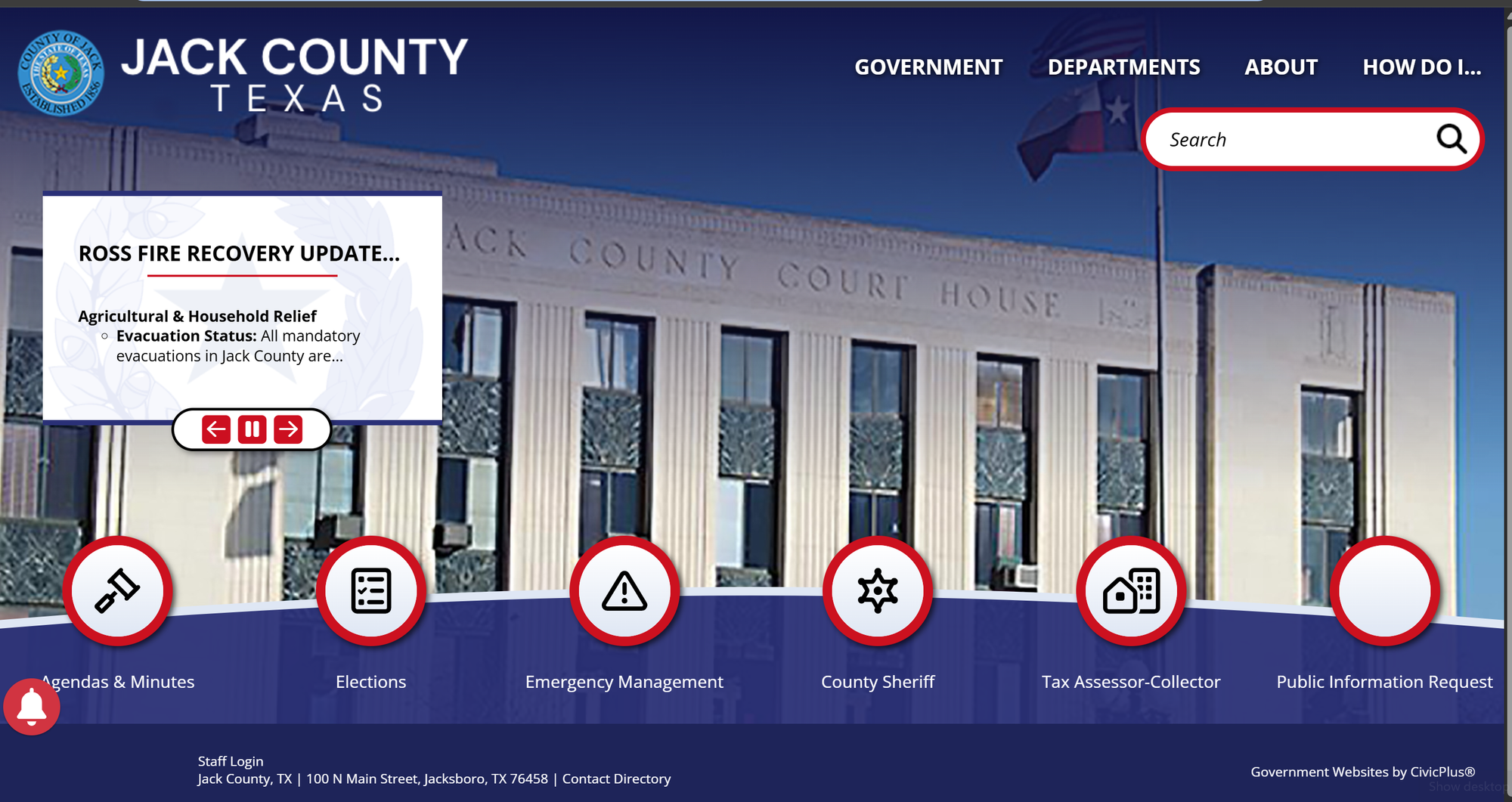
The Ross Fire became a significant new variable affecting property owners, emergency costs and potentially the County’s taxable-value picture.
September 14
The Commissioners Court was scheduled to consider the FY 2026-2027 budget and tax rate. The Court did not adopt either one and discussed updated financial information, Ross Fire effects and the need for legal guidance concerning questions raised about the budget process.
What actually happens in a budget workshop?
Much of the real budget work occurs before the final adoption meeting.
Commissioners may hear requests from elected officials and departments, compare salary proposals, decide whether equipment is needed immediately or can wait, estimate fuel and insurance costs, consider reserve levels and decide which revenues can responsibly support recurring expenses.
A workshop can materially change the working proposal even when no final budget is adopted that day.
That is why identifying the current proposed budget matters. If the Court changes the working numbers during August, a July document may no longer tell taxpayers what the Court is actually considering.
The budget hearing is a separate step
Texas Local Government Code §111.007 says Commissioners Court shall hold a public hearing on the proposed budget. Any person may attend and participate.
For Jack County’s process:
• the proposed budget must be filed no later than August 15;
• the budget hearing must be held no later than the 25th day after the budget is filed;
• the budget hearing must occur before the County adopts its property-tax rate;
• public notice must state the date, time and location of the hearing; and
• Local Government Code §111.0075 separately requires newspaper publication of the budget-hearing notice during the statutory notice window.
This hearing is not interchangeable with a hearing on a proposed tax increase. The two proceedings serve different statutory purposes. They may be held during the same Commissioners Court meeting, but they remain separate public hearings, each with its own notice and legal requirements.
HB 1522 added transparency to every budget-discussion meeting
HB 1522 goes beyond the final budget hearing.
Its trigger is a meeting at which the governmental body will discuss or adopt its budget.
That means a budget workshop can trigger HB 1522 even when the Court takes no final action.
The Texas Association of Counties has published public LegalEase guidance explaining the new rule. TAC says a commissioners court budget-meeting notice must include the proposed budget unless it is clearly accessible from the county website home page and must include the taxpayer impact statement. TAC also advises counties to use a conservative approach when calculating the new three-business-day meeting-posting deadline.
What HB 1522 implementation looks like in other Texas counties
We do not have to rely only on statutory language to see how counties are implementing these requirements.
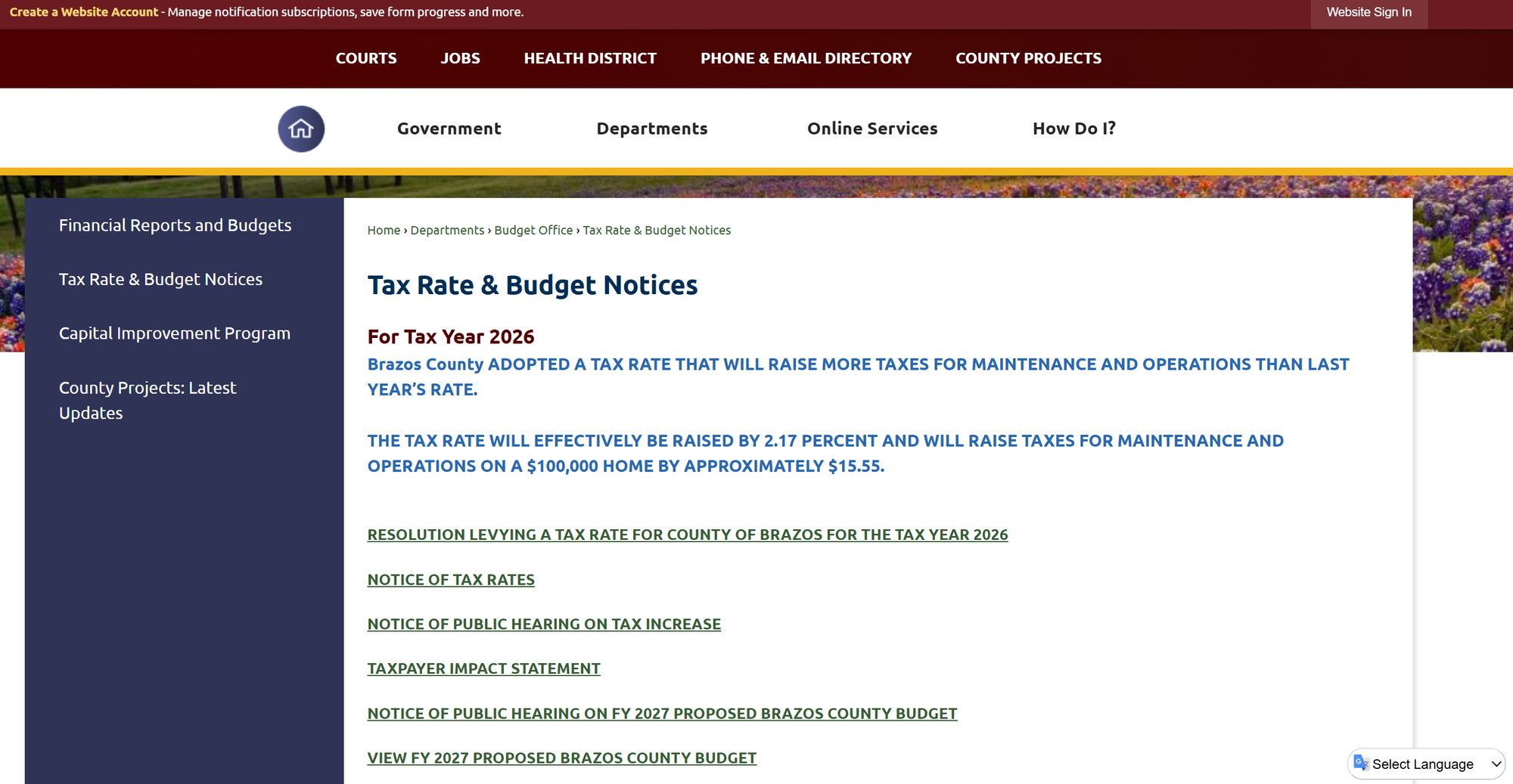
Brazos County provides a useful current example. Its 2026 taxpayer impact statement expressly identifies HB 1522 and shows the median-value homestead, the current-year tax bill, the estimated tax bill under the proposed budget and tax rate and the estimated bill under a balanced budget funded at the no-new-revenue rate. Brazos County also separately posted a proposed-budget hearing notice and a tax-increase hearing notice.
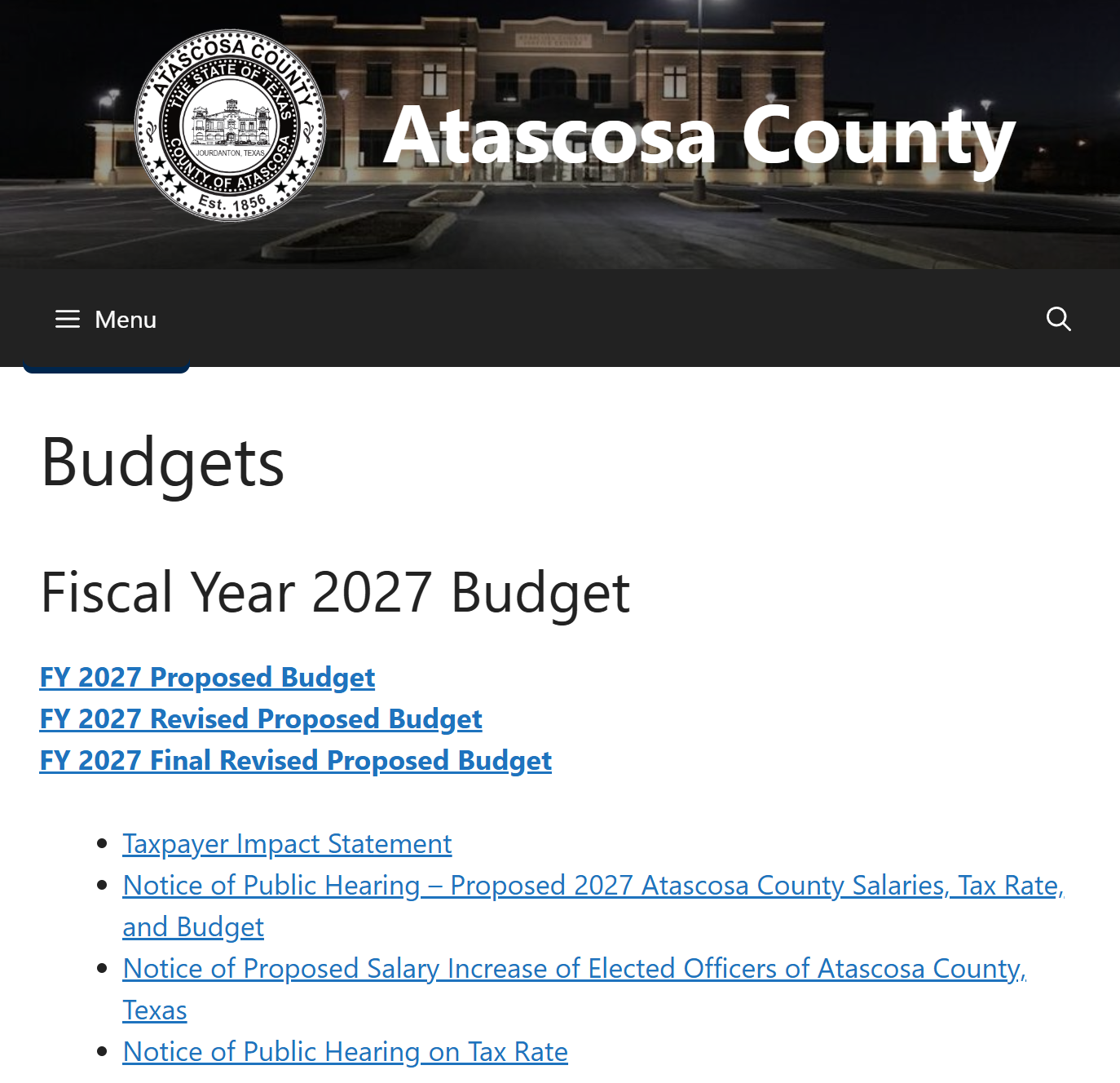
Atascosa County provides another useful example. Its Fiscal Year 2027 budget page keeps the proposed budget, revised proposed budgets, taxpayer impact statement, budget-hearing notice and tax-rate hearing notice together on one public page.
We are not presenting either county as the legal standard for every design choice. The value of the examples is practical: taxpayers can identify the proposal being discussed, see how it changed and see the estimated property-tax impact without reconstructing the process from several different parts of the website.
Truth-in-Taxation is not a tax cap
The name can be misleading.
Truth-in-Taxation does not tell Commissioners what tax rate they should adopt. It is primarily a disclosure, calculation and decision-making framework designed to let taxpayers see proposed rates and their relationship to prior-year revenue.
The Texas Comptroller describes the process in stages: draft a budget, calculate the applicable rates, publish required notices, hold the hearings or meetings required for the proposed rate and adopt the tax rate.
Two calculated rates are central to that process.
What those rates mean in practice
The NNR calculation excludes qualifying new property from the same-property comparison and includes statutory adjustments for exemptions and other items. That means a county can receive additional property-tax revenue from new construction while adopting the NNR rate, and an individual property owner’s bill can still rise or fall depending on taxable value and exemptions.
The voter-approval rate is a separate calculated threshold. It is not a recommended tax rate. Its role is to determine when additional voter-approval procedures may apply under state law.
With those distinctions in mind, Jack County’s published rates can be compared directly.
Jack County’s published comparison
The September tax-rate notice we reviewed listed:
• Proposed tax rate: $0.453183 per $100 of taxable value
• No-new-revenue tax rate: $0.430234 per $100
• Voter-approval tax rate: $0.453184 per $100
Jack County’s prior-year adopted total rate was $0.442043 per $100.
For a property with exactly $100,000 in taxable value, the difference between the published proposed rate and the published NNR rate is about $22.95 for the year.
For $200,000 in taxable value, the difference is about $45.90.
Those examples hold taxable value constant. They do not predict an individual tax bill.
What choosing the NNR rate would change, and what it would not
This is an important distinction in Jack County’s current situation.
The Comptroller’s Truth-in-Taxation guidance says a taxing unit proposing a rate at or below the applicable NNR and voter-approval thresholds follows the public-meeting path rather than the tax-increase-hearing path. The Comptroller also states that adoption of the tax rate must be a separate agenda item.
Moving to the no-new-revenue rate could simplify the remaining tax-rate process. It would not, by itself, resolve the separate budget-hearing or HB 1522 questions. The clearest path forward is for the County to identify the current proposed budget, provide the required taxpayer-impact information, clarify the budget-hearing record and then complete the remaining budget and tax-rate actions in a way the public can easily follow.
How the Ross Fire changed the picture
The Ross Fire arrived late in the annual budget calendar, after much of the workshop process had already occurred.
It can affect the County’s financial picture in two broad ways.
First, wildfire response can create eligible public costs. FEMA approved a Fire Management Assistance Grant for the Ross Fire, which can reimburse 75 percent of eligible fire-suppression costs. Eligibility, which government incurred a particular expense and reimbursement timing all matter, so that should not be read as reimbursement of 75 percent of every local fire-related cost.
Second, Texas Tax Code §11.35 provides a temporary exemption for certain qualified property that is at least 15 percent damaged in a governor-declared disaster area. The exemption percentage depends on the assigned damage level and is prorated under the statute. When qualifying exemptions reduce taxable value, the same tax rate produces less tax on the affected property.
The exact countywide budget effect depends on the amount of qualifying value affected, the exemptions ultimately granted, how those changes are incorporated into the tax roll and the treatment required in the applicable tax-rate calculations.
That is why the final taxable-value information and the final tax-rate calculation worksheet matter more than estimates made before the fire.
The Form 50-856 is where the tax-rate math becomes visible
The no-new-revenue and voter-approval rates are not numbers Commissioners simply select.
They are calculations based on the tax base, prior-year levy and statutory adjustments.
The final Form 50-856 tax-rate calculation worksheet is therefore one of the most important documents for understanding the tax-rate decision. The worksheet should allow taxpayers to see the numbers used to produce the calculated rates and, ideally, trace the non-mathematical inputs back to supporting appraisal and tax records.
What taxpayers still need to see
Four items would make the remaining process much easier to reconstruct.
1. The current proposed budget
The public should be able to see the version the Court is actually considering after the summer workshops and late changes.
2. The HB 1522 taxpayer impact statement
This gives taxpayers the median-homestead comparison between the current year, the proposed budget and a balanced budget funded at the NNR rate.
3. The final Form 50-856 and supporting values
This shows how the no-new-revenue and voter-approval rates were calculated and allows the public to understand how updated taxable values and exemptions were treated.
4. The record of the required proposed-budget hearing, or the County’s written legal position concerning that requirement
If the required Chapter 111 budget hearing already occurred, identifying the date and producing the notice and record would answer the question. If it did not, the written legal guidance the County said it would seek becomes particularly important to understanding how officials intend to proceed.
Why this process matters
A county budget is a statement of priorities, but it is also a math problem with legal deadlines and public-participation requirements.
The Court has to estimate what services will cost, determine which revenues are reasonably available, account for changes in taxable value and then choose a property-tax rate that supports the final plan.
The Ross Fire complicated those calculations at a difficult point in the calendar. HB 1522 also means this is the first Jack County budget cycle under a new set of meeting-notice and taxpayer-impact requirements.
The public does not need every taxpayer to reach the same conclusion about what the County should spend or which lawful tax rate it should adopt.
But everyone should be able to see the same proposed budget, understand the same calculated rates, know when the required hearings occurred and follow the path from the working numbers to the final decision.
That is the part we will keep documenting.
Explore further
Jack County Budget Hearing: What the Law Requires and What Options Remain
Texas Comptroller: Truth-in-Taxation Tax Rate Adoption
Texas Comptroller: Truth-in-Taxation Notice Requirements
Texas Comptroller: Truth-in-Taxation Hearing Requirements
Texas Association of Counties: HB 1522 Budget Meeting Notice Guidance
Texas Association of Counties: Three-Business-Day Posting Guidance
Brazos County: HB 1522 Taxpayer Impact Statement
Atascosa County: Fiscal Year 2027 Budget
Texas Local Government Code Chapter 111
Texas Comptroller: Property Taxes in Disaster Areas
A question for the Front Porch
Which part of the County budget process would be most useful to unpack next: the current working budget, the Form 50-856 no-new-revenue calculation or a department-by-department look at what changed during the workshops?
Join the conversation on The Front Porch on Facebook.